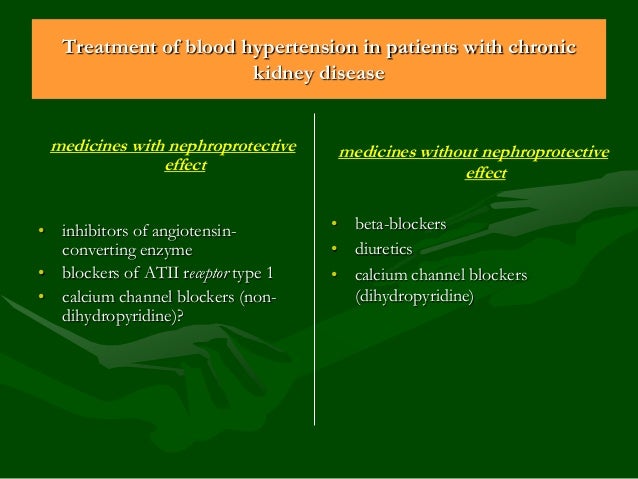
Blood pressure level above 130/80 mmhg in ckd patients requires lifestyle modifications and multiple antihypertensive medications. according to recent guidelines, angiotensin-converting enzyme (ace) inhibitors should be the drugs of first choice. angiotensin ii receptor blockers (arbs) should be used if the ace inhibitor is not tolerated. The optimal objectives of the medical management of chronic kidney disease ( ckd) are to delay the progression of the disease, to maintain the quality of life of . Acei and arbs, which selectively reduce glomerular pressure) and diuretics. aceis, arbs and potassium-sparing diuretics may also be stopped because of hyperkalaemia. this document gives guidance on when these drugs should be re-started after an episode of aki. 1. the original indication for the use of the drug should be reviewed. 2.
Ace inhibitors. an ace inhibitor (or angiotensin converting enzyme inhibitor) is a medication used primarily for the treatment of heart, blood vessel, and kidney . Kdigo guidelines suggest that an arb or acei be used in diabetic adults with ckd and urine albumin excretion 30-300 mg/24 hours (or equivalent). (2d) kdigo guidelines recommend that an arb or acei be used in both diabetic and nondiabetic adults with ckd and. Ace inhibitors in chronic kidney disease (ckd) angiotensin-converting enzyme (ace) inhibitors were originally shown to retard progression of type 1 diabetic . 25 feb 2019 also, in nondiabetic patients with ckd and hypertension, both acei and arb slowed the progression of ckd through effects other than bp .
Best Practices In Managing Table 3 6 Hyperkalemia
Prescription of an acei or arb at discharge was associated with reduction in all-cause mortality acei for ckd in patients with acute hf and ckd. clinicians need to be aware of the prognostic value and consider prescribing acei or arb to high-risk patients. The chronic kidney disease (ckd) clinical pathway is a resource for primary care providers to aid in the diagnosis, or initiation of acei or arb therapy).
Ckd Pathway Diagnose
3. double the dose of acei (in some acei for ckd patients, increasing the dose may improve the antihypertensive effect). 4. combine acei and calcium channel blocker (ccb, such as amlodipine) treatment, especially if severely hypertensive. 5. combine acei and ccb with angiotensin blocker (arb, such as telmisartan). More recently, a study by hsu et al demonstrated that ace inhibitors/arbs are associated with lower risk for progression to krt in participants with advanced ckd . Congestive heart failure (chf) provider’s guide to diagnose and code chf congestive heart failure is a chronic complex clinical syndrome which prevents filling or emptying of blood from the heart. chf is caused by either a structural (valvular or congenital) and/or a dysfunctional (myocardial infarction) anomaly. 3. double the dose of acei (in some patients, increasing the dose may improve the antihypertensive effect). 4. combine acei and calcium channel blocker (ccb, such as amlodipine) treatment, especially if severely hypertensive. 5. combine acei and ccb with angiotensin blocker (arb, such as telmisartan).
Should we stop angiotensin converting enzyme inhibitors.
Kdigo Clinical Practice Guideline On Diabetes Mangement In
24 apr 2020 ace inhibitors (aceis) and angiotensin ii receptor blockers(arbs) provide significant renal and cardiovascular protection for ckd patients, but . 9 mar 2020 people on angiotensin-converting enzyme (ace) inhibitors or ace inhibitor/ arb therapy as tolerated in typical patients with ckd with . Use additional code to identify stage of ckd (n18. 1-n18. 4, n18. 9) i13. 10 ; hypertensive heart and ckd w/o heart failure, w/stage 1 stage 4 ckd, or unspeciied ckd : use additional code to identify stage of ckd (n18. 1-n18. 4, n18. 9) hypertensive heart and ckd w/o heart failure, w/stage 5 ckd, or end stage renal disease : hypertensive heart and ckd.
Kdigo clinical practice guideline on diabetes mangement in chronic kidney disease public review draft december 2019 confidential: do not distribute. Dec 14, 2020 · acei or arb are the first-line drugs in the management of chronic kidney disease (ckd) patients. the use of acei or arb had a superior effect than no acei or arb treatment on decreasing the proteinuria and slowing acei for ckd kidney disease progression. the efficacy of acei and arb was comparable. glomerular disease. the use of acei or arb is the mainstay. Ace inhibitors can boost renal repair by promoting survival and repair of podocytes, preventing mesangial cell hyperplasia, and inducing glomerular endothelial .

The chronic kidney disease (ckd) clinical pathway is a resource for primary care providers to aid in the diagnosis, medical management, and referral of adults with ckd. who & how to test for ckd testing for ckd should not be universal, it should be targeted for individuals at increased risk of developing ckd. 1 jun 2004 treatment of such patients with angiotensinconverting enzyme (ace) inhibitors and angiotensin-receptor blockers (arbs) slows the progression .
Kdigo Clinical Practice Guideline On Diabetes
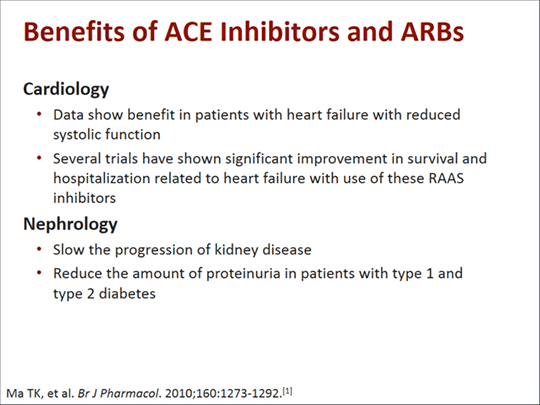
Ace inhibitors effectively reduce systemic vascular resistance in patients with hypertension, heart failure or chronic renal disease. this antihypertensive efficacy probably accounts for an important part of their long term renoprotective effects in patients with diabetic and non-diabetic renal disease. And when people with chronic kidney disease (ckd) have untreated high blood and chronic kidney disease who get ace inhibitors or arbs — ckd‑05. Angiotensin converting enzyme inhibitors (acei) and angiotensin ii receptor antagonists (arb) are commonly used in patients with early ckd, but their value in advanced ckd (estimated gfr (egfr) ≤30 ml/min/1. 73 m2) is unknown. The chronic kidney disease (ckd) clinical pathway is a resource for primary care providers to aid in the diagnosis, medical management, or initiation of acei or arb therapy). test acr and urinalysis. in patients with a previous finding of an abnormal egfr and acr in the past 6.
Proteinuric kidney disease, especially in the early and middle stages of renal insufficiency, may be favorably affected by ace-i/arb. the progression of renal insufficiency is thereby slowed down and dialysis obligation occurs later or can even be avoided. this effect is independent of the underlyin. Apr 17, 2021 · dapa-ckd was a multicenter, double-blind, placebo-controlled, randomized trial conducted at 386 study sites in 21 countries. the trial was designed to assess the effects of dapagliflozin on kidney and cardiovascular outcomes in patients with ckd, with or without type 2 diabetes, and was registered with clinicaltrials. gov as nct03036150. the trial was approved by ethics committees at each. No ckd ckd present with or without diabetes bp goal < 150/90 bp goal < 140/90 bp goal bp goal < 140/90 nonblack yes initiate thiazide or ccb, alone or combo initiate acei or arb, alone or combo w/another class reinforce lifestyle and adherence titrate medications to maximum doses or consider adding another medication (acei, arb, ccb, thiazide).


Congestive heart failure (chf) cigna.
Dec 14, 2020 · acei or arb are the first-line drugs in the management of chronic kidney disease (ckd) patients. the use of acei or arb had a superior effect than no acei or arb treatment on decreasing the proteinuria and slowing kidney disease progression. the efficacy of acei and arb was comparable. glomerular disease. the use of acei or arb is the mainstay.
0 Response to "Acei For Ckd"
Post a Comment